

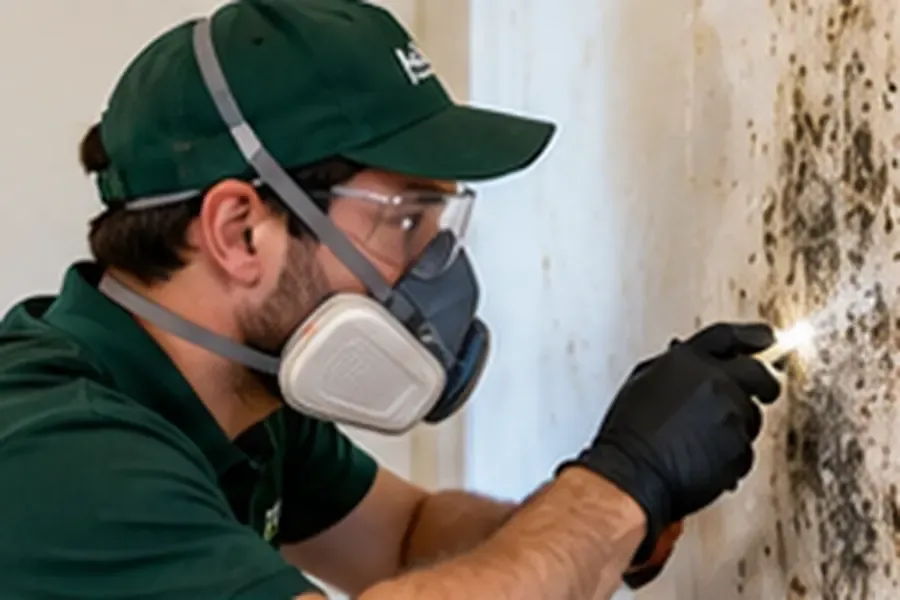
Black Mold Removal · Littleton, CO · Open 24/7
Black Mold Removal in Littleton, CO
Moldra handles black mold removal in Littleton, CO, safely and for good. We confirm what the dark mold is, contain the area with negative air, remove moldy drywall and wood, HEPA clean, and fix the leak that let it grow. Our local team has served Littleton since 2012, 24/7. Do not scrub it or use bleach.
- Available 24/7
- Local Littleton team since 2012
- Clear written estimate before work starts
Get a fast estimate
Tell us what you are seeing. We call you back, 24/7.
Black Mold Removal Littleton
- Since 2012 14+ years in Littleton
- Open 24/7 A person answers day and night
- Local office W Cross Dr, Littleton, CO
- Source found first Moisture meters and thermal imaging
- HEPA & containment Negative air on every removal
- Clearance checked Lab testing when you need proof
How does black mold removal in Littleton, CO work?
"Black mold" usually means Stachybotrys chartarum, a dark green-black mold that grows on materials like drywall paper and wood that have stayed wet for a long time. It should be removed with containment and HEPA filtration, and the moisture source must be fixed, or it will come back.
Who to call in Littleton: Moldra has handled black mold removal in Littleton, CO since 2012, from our local office at 9800 W Cross Dr #110, Littleton, CO 80123. We are open 24/7. Call (720) 743-9257.
What are the signs of black mold?
- Dark green or black patches that look slimy or sooty
- Mold on drywall, wallpaper, ceiling tiles or wood after a leak
- A strong, earthy or musty smell in one room
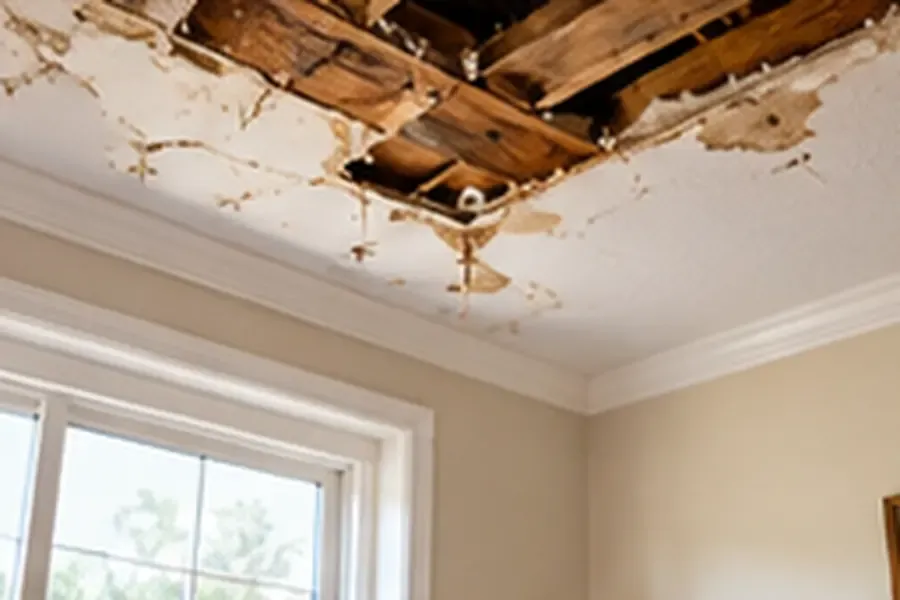
- Long-term leaks from a roof, window, swamp cooler or plumbing
- Mold that came back after you cleaned it
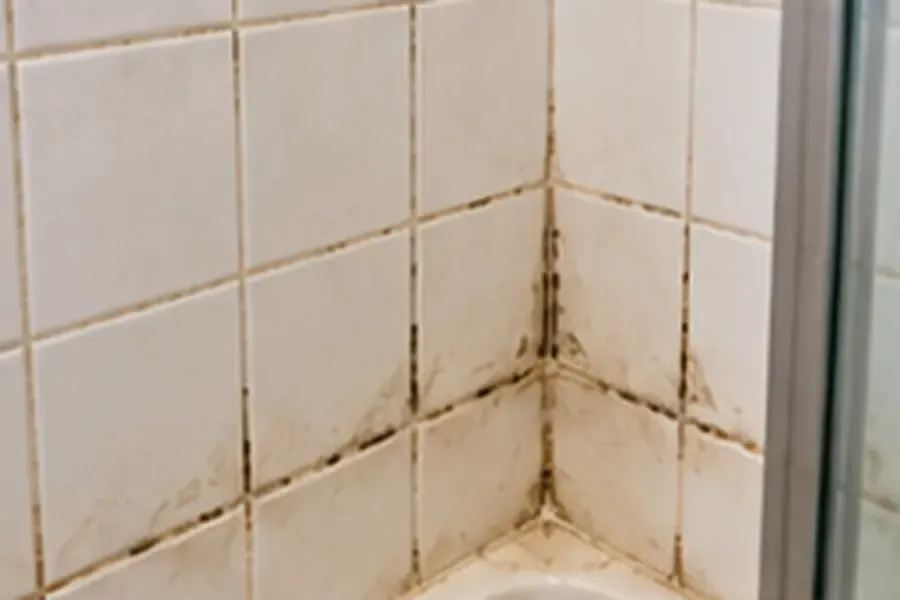
Why it matters
Why you need professional black mold removal
Black mold is usually larger and wetter than it looks, so it needs more than a spray bottle.
It lives inside materials
Stachybotrys grows into drywall paper and insulation. Surface cleaning leaves the growth behind.
Disturbing it spreads spores
Cutting out moldy drywall without containment and negative air spreads spores into the rest of the home.
The leak is the real problem
If the water source is not found and fixed, black mold returns. Our inspection finds it first.
Documentation matters
For a home sale, rental or insurance claim, a documented removal and clearance check protect you.
Our black mold removal service
Identify it first
Many dark molds look alike. A swab sample confirms what it is, so the plan fits the problem.
Containment
Plastic barriers and negative air pressure keep spores from spreading to the rest of the house.
HEPA air scrubbing
Air scrubbers with HEPA filters capture spores released during removal.
Remove moldy materials
Porous materials like drywall, insulation and carpet pad are cut out and bagged, not just cleaned.
Clean and treat
HEPA vacuuming, damp wiping and an EPA-registered antimicrobial on framing and surfaces.
Fix the cause
We find the leak or humidity problem and tell you exactly what needs repair.
Our process
How we remove black mold in Littleton
Black mold removal follows the same remediation standard as any mold, with extra care because Stachybotrys usually means materials have been wet for a long time.
-
Step 1: Confirm and map it
We inspect the area, trace the moisture with meters and thermal imaging, and take a sample if you want lab confirmation of Stachybotrys chartarum.
-
Step 2: Full containment
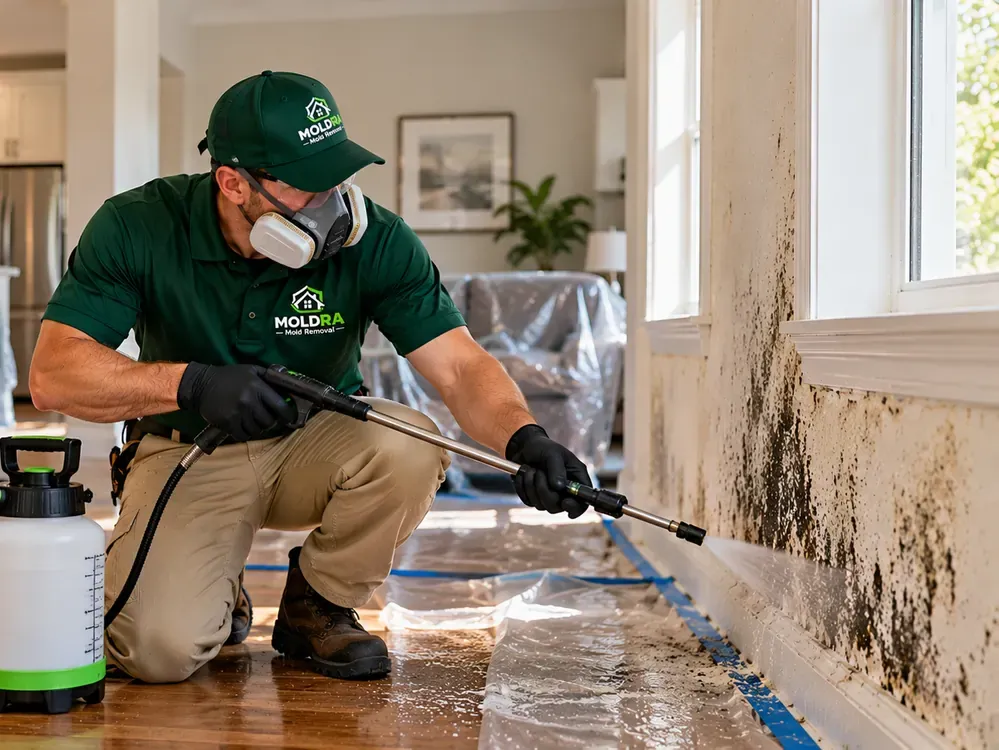
Plastic barriers, a zipper door and negative air machines keep spores inside the work area. HEPA air scrubbers run throughout the job.
-
Step 3: Remove wet, moldy materials
Drywall, insulation, carpet and pad with black mold growth are cut out in sections, bagged inside the containment and removed. Porous materials with growth are not saved.
-
Step 4: HEPA vacuum and clean
Studs, joists, subfloor and concrete are HEPA vacuumed, scrubbed and treated with an antimicrobial. Wood with surface growth can usually be cleaned rather than replaced.
-
Step 5: Dry and fix the leak
Because black mold needs long-term moisture, the leak behind it must be repaired. We dry the structure and log readings until it is dry.
-
Step 6: Verify and rebuild
A clearance check, with air samples when you want proof, confirms the area is back to normal before new drywall goes up.
Before & after
Black Mold Removal before and after
Real results from our Littleton jobs: the same spot before we started and after the work was done.
Local know-how
Understanding black mold in Littleton, Colorado
"Black mold" is the common name for Stachybotrys chartarum, a greenish-black mold. Here is what it means to find it in a Front Range home.
Why it is a sign of a long-running leak
Littleton gets only about 16 inches of precipitation and about 66 inches of snow in a typical year (Western Regional Climate Center data), and the air is dry most of the time. Stachybotrys grows on paper and cellulose, like drywall facing, that stays wet for a long time. In a dry climate that almost always means a slow plumbing leak, a roof or window leak, a leaking swamp cooler or a basement that never fully dried after snowmelt.
Not every black mold is Stachybotrys
Many common molds, including Cladosporium and Aspergillus, can look dark. Color alone does not tell you the species. A lab sample can, but the CDC advises removing any mold the same way.
Health facts, not fear
Stachybotrys can produce mycotoxins. The CDC says damp, moldy homes can cause stuffy nose, wheezing and eye or skin irritation, with stronger reactions in people with asthma, allergies or weak immune systems. A link between black mold and rare illnesses has not been proven.
Stachybotrys needs materials that stay wet for a week or more, so in our dry Colorado climate it usually points to a hidden, long-running leak. Common Littleton sources are slow plumbing leaks inside walls, hail-damaged roofs, leaking evaporative (swamp) coolers and basements that flooded during spring snowmelt.
Because the air outside is dry for most of the year, a black mold problem here almost always has one clear water source. Finding and fixing that source is the part that keeps it from coming back.
How much does black mold removal cost?
Black mold removal is priced by the size of the area and the materials involved. See typical Littleton ranges in our cost guide.
Mold removal cost in LittletonRelated services
Often needed together
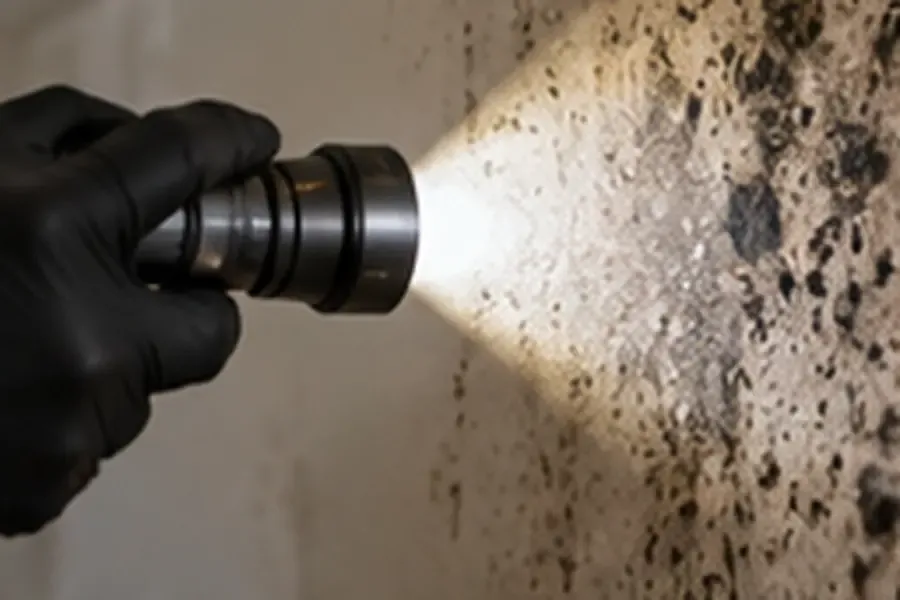
Inspection & Testing
Moisture mapping, thermal imaging, and air or swab samples analyzed by a lab.
Learn more
Mycotoxin Testing
Lab testing of home dust and air for mold toxins, plus mitigation.
Learn more
Water Damage Restoration
Extraction, structural drying and mold prevention after leaks and floods.
Learn more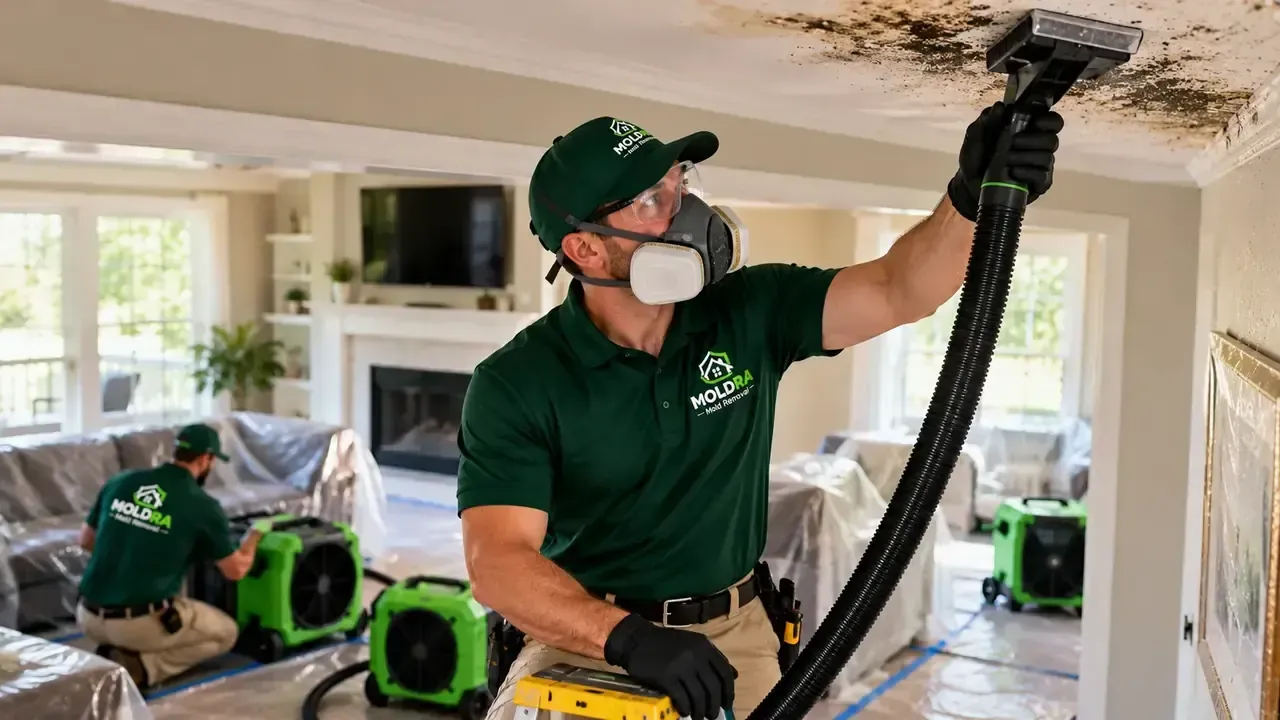
Mold removal in Littleton
Full remediation from inspection to clearance testing.
Learn moreFrom our blog
Mold guides for Littleton homeowners
Plain-English answers from our team about spotting mold, testing and what removal involves.
-
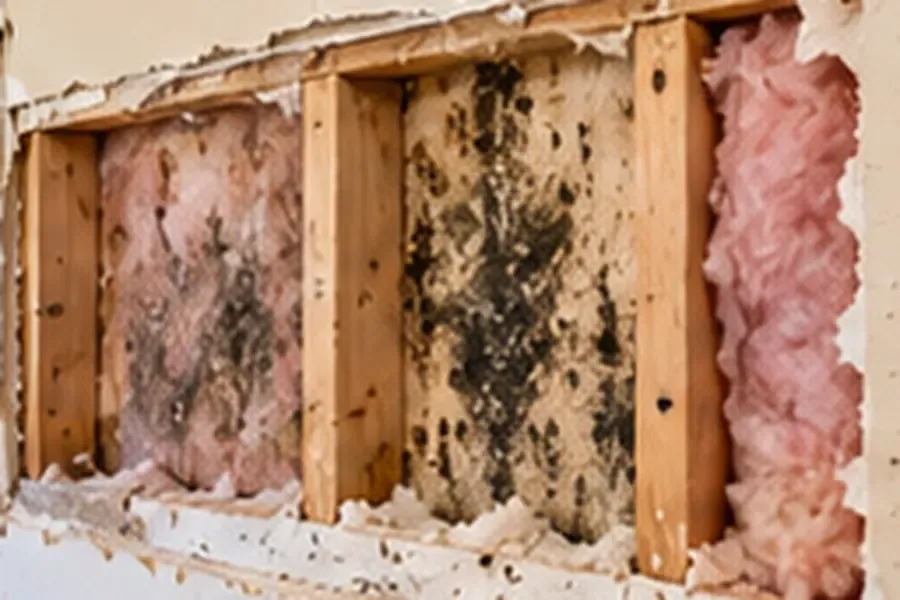 Black mold
Found Black Mold in Your House? What to Do First
Found black mold in your house? What to do in the first hour, what not to do, when you can clean it yourself, and when to call a professional in Littleton.
Read the guide -
 Inspection & testing
Is Mold Testing Worth It? When to Test and When to Skip It
When professional mold testing is worth the money, when it is not, how air and swab tests work, and why DIY kits are misleading. Honest advice from Littleton mold pros.
Read the guide -
 Signs & causes
7 Signs of Mold in Your Home (and Where It Hides)
The first signs of mold in a house: musty smells, stains, peeling paint, allergy symptoms and more. Where hidden mold grows in Littleton homes and what to do.
Read the guide
Service areas
We serve these areas in Littleton, CO
From our office on W Cross Dr we cover all of Littleton and the neighborhoods around it. Pick your area to see the mold problems we see there most.
- Littleton
- Downtown Littleton
- Southwest Littleton
- Ken Caryl
- Dakota Ridge
- Columbine
- Columbine Knolls
- Columbine Valley
- Bow Mar
- Marston Lake
- Chatfield
- Roxborough
- Sterling Ranch
Smell something musty? Talk to a Littleton mold specialist today.
Tell us what you are seeing. We will explain the next step, whether that is a test, an inspection or removal.
- Available 24/7
- Local Littleton team since 2012
- Clear written estimate before work starts
Location
Black Mold Removal from our office on W Cross Dr
We are based on W Cross Dr in Littleton and serve the whole city and the neighborhoods around it.
Moldra 9800 W Cross Dr #110, Littleton, CO 80123 (720) 743-9257 Open in Google MapsFAQ
Black Mold Removal questions
Is black mold dangerous?
The CDC says all indoor mold should be removed, whatever its color, and that people with allergies, asthma or weak immune systems are most at risk. Black mold can produce mycotoxins. If you have health concerns, talk to your doctor.
Can I clean black mold with bleach?
The EPA does not recommend bleach for routine mold cleanup. Bleach does not reach mold roots in porous materials like drywall, and scrubbing can spread spores. Small areas under about 10 square feet on hard surfaces can be cleaned with detergent and water; larger areas need a professional.
How do I know if it is really black mold?
You cannot tell by color alone. A swab or tape-lift sample analyzed by a lab confirms the species.
Should I stay in my house during black mold removal?
With proper containment and negative air most families can stay home, as long as they keep out of the work area. People with asthma, infants or weak immune systems may want to stay elsewhere during removal.
Will black mold come back after removal?
Not if the moisture source is fixed and the area stays dry. Mold returns when the leak or humidity problem is not solved.